 +1987 123456
 Rock Street, San Francisco


Let’s be honest for a second: when most people hear “marketing,” they think of the flashy stuff. They picture Super Bowl commercials, viral TikTok trends, or a clever billboard on the highway.
But if you peel back the layers of any high-growth company—whether it’s a scrappy startup or a Fortune 500 giant—you won’t just find great ads. You’ll find a boring, rigorous, and incredibly powerful engine running in the background.
That engine is Marketing Management.
It’s not just about making things “look good.” It is the central operating system of your business. Marketing management is the strategic alignment of your product, your pricing, your distribution, and your promotion with the brutal reality of what your customer actually needs.
Here is the thesis I want you to keep in mind as we dive in: Effective marketing management doesn’t just increase sales; it optimizes the entire customer lifecycle—from acquisition to advocacy—fueling predictable and scalable business growth.
If you are treating marketing as a department that “colors in the lines,” you are leaving money on the table. Here is how moving from “marketing” to “marketing management” changes the trajectory of your business.
The Core Mechanism: Turning Strategy into Revenue

Many business owners struggle to connect the dots between “management strategy” and the cash in the bank. The connection isn’t vague; it’s causal.
When we talk about marketing management impacting growth, we are usually talking about the Ansoff Matrix. It sounds academic, but it’s actually a practical roadmap for where your next dollar comes from. Effective management forces you to pick a lane rather than throwing spaghetti at the wall.
1. Market Penetration (The “Squeeze” Strategy)
This is about getting more out of what you already have. Marketing management looks at your current data and asks: How do we get our existing customers to buy more, or how do we steal customers from competitors? This isn’t about new products; it’s about aggressive pricing strategies, loyalty programs, and dominance.
2. Market Development (The “Expansion” Strategy)
This is where management shines. You take your existing product and find new people for it. Maybe you’ve dominated the US market and it’s time to look north. For instance, brands looking to expand globally might analyze specific regional trends, such as Canadian Influencer Marketing in 2026: Statistics, Trends & The Shift to Performance, to understand how to break into a new territory effectively without wasting budget on cultural mismatches.
3. Product Development & Diversification
You can’t just guess what people want. Marketing management sets up “listening posts”—feedback loops, surveys, and usage data—to tell your R&D team exactly what to build next. It reduces the risk of launching a flop because the “management” side has already validated the demand.
Shutterstock
1. Strategic Alignment & Resource Optimization
One of the biggest silent killers of business growth is the “Silo Effect.” Sales hates Marketing, Marketing thinks Product is too slow, and Customer Success is left cleaning up the mess.
Modern marketing management is shifting toward RevOps (Revenue Operations). This is the practice of smashing those silos.
Stopping the “Budget Bleed”
Without management, marketing is just spending. With management, it’s investing.
A strong manager looks at the P&L and makes hard calls. If a channel isn’t performing, they kill it—fast. They move capital from low-ROI activities (like vanity PR) to high-ROI activities (like bottom-of-funnel content).
Seasonal Agility
Resource optimization also means knowing when to push. A great marketing manager knows that timing is everything. You don’t run the same play in July that you run in December. You need to be planning months ahead, curating specific campaigns—like developing creative Christmas marketing ideas—that align with consumer spending habits, ensuring you capture maximum revenue during peak seasons.
2. Building Brand Equity & Competitive Advantage
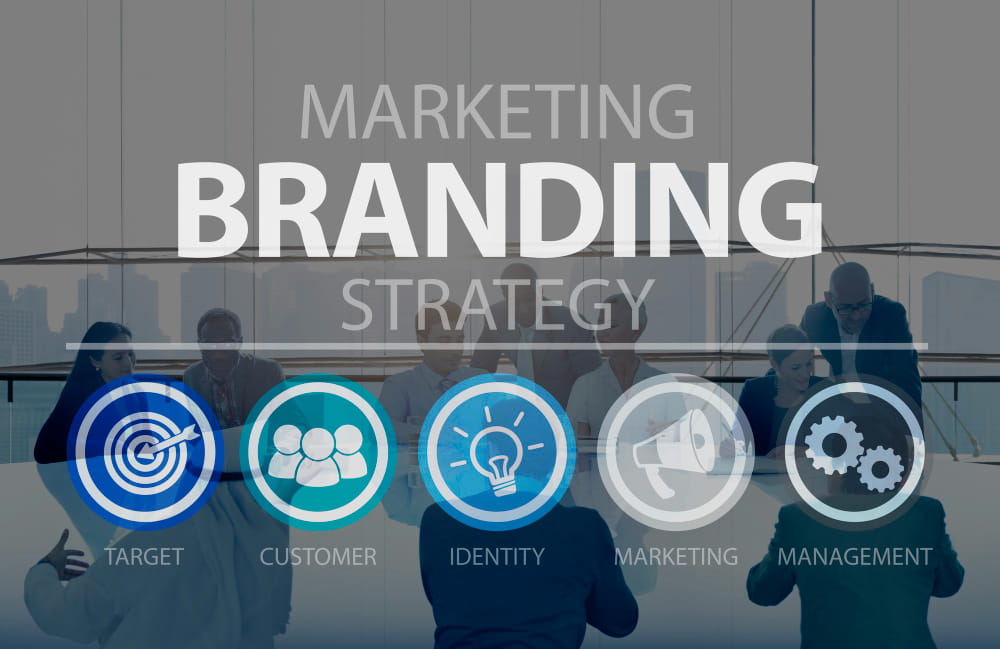
If you strip away your logo and your website, is your company still worth anything? That is the test of Brand Equity.
Marketing management is responsible for building this intangible asset. It’s the difference between a commodity (which competes on price) and a brand (which competes on value).
- Differentiation: Management defines the Unique Value Proposition (UVP). Why should I buy from you? If the answer is “we have great service,” that’s not enough. Management digs deep to find the real differentiator.
- From Transactional to Emotional: We want to move customers up the ladder.
- Level 1: They buy because it’s cheap.
- Level 2: They buy because it works.
- Level 3: They buy because they love who you are.
Marketing management builds the systems (community management, consistent voice, mission-driven content) that get customers to Level 3. That is where you find “pricing power”—the ability to raise prices without losing customers.
3. The Role of Data-Driven Decision Making (The Modern Compass)
We are done with the “Mad Men” era of marketing where creative directors drank scotch and guessed what people wanted. Today, marketing management is a science.
This is the “Tech Gap” that so many businesses fall into. They have the data, but they aren’t managing it.
Predictive Analytics
We don’t just look at what happened last month. We use data to predict what will happen next month.
- Is search demand for our category trending down?
- Is a specific competitor gaining ground in organic search?
Personalization at Scale
This is impossible without a tech stack. Marketing management involves selecting and integrating the right tools—HubSpot, Salesforce, Marketo—to ensure that when a customer talks to you, you know who they are.
If a customer has visited your pricing page three times in a week, your marketing management system should automatically alert sales or trigger a specific email sequence. That isn’t magic; it’s engineering.
Agile Marketing
The market moves too fast for annual marketing plans. The modern manager adopts an “Agile” methodology. You plan in sprints. You test a hypothesis (e.g., “LinkedIn ads will drive cheaper leads than Facebook”), you run it for two weeks, you measure, and you pivot. This “test, learn, pivot” cycle allows you to adapt to market changes faster than the giants you are competing against.
4. Customer Retention: The Silent Growth Engine

Here is a statistic that should be tattooed on every business owner’s arm: Increasing customer retention by just 5% can increase profits by 25% to 95%.
Yet, most companies spend 90% of their budget on acquiring new customers.
Marketing management flips this ratio. It recognizes that the “funnel” doesn’t end at the purchase. It turns into an hourglass.
- Onboarding: The first 30 days determine if a customer stays for 3 years. Marketing manages the communication flow here to ensure value is realized immediately.
- Churn Reduction: By monitoring usage data, management can flag “at-risk” customers. If a user hasn’t logged in for 20 days, a re-engagement campaign should trigger automatically.
This focuses on CLV (Customer Lifetime Value). If you can get your customers to stay twice as long, you effectively double your company’s revenue without having to find a single new lead.
Key Metrics: Measuring the Impact
How do you know if your management is actually working? You stop looking at “Likes” and “Pageviews” and start looking at financial ratios.
Here is the dashboard of a high-impact marketing manager:
| Metric | Why It Matters | Target |
| CAC (Customer Acquisition Cost) | How much cash do you burn to get one customer? If this creeps up, your growth is unsustainable. | Lower is better (context dependent). |
| CLV:CAC Ratio | The golden metric. If you spend $100 to get a customer (CAC) and they pay you $300 over their life (CLV), you have a 3:1 ratio. | 3:1 is healthy. 1:1 implies you are dying. |
| ROMI (Return on Marketing Investment) | For every $1 spent on marketing, how much revenue came back? | > 5:1 is excellent. |
| Time to Payback | How long does it take to earn back the CAC? | < 12 months for SaaS/B2B. |
Case Study: Netflix’s Pivot
Let’s look at a real-world example of marketing management in action: Netflix.
In 2011, Netflix made a blunder. They tried to split their DVD and streaming services (remember Qwikster?). Customers hated it. Stock dropped.
But their marketing management team didn’t just panic; they pivoted based on data. They realized that their competitive advantage wasn’t “mailing DVDs” or even “streaming movies.” It was original content.
They used their massive data set (viewing habits) to greenlight House of Cards. They knew the director people liked, the actor people liked, and the genre people binged. They didn’t guess. They managed the data to manufacture a hit.
The result? They transitioned from a content distributor to a content creator, effectively saving the business and dominating the decade. That is the power of strategic marketing management.
Conclusion: The Future is Automated (But Human)
Marketing management is the brain of your business. It impacts growth by ensuring that every dollar spent is an investment, not an expense. It aligns your teams, protects your brand equity, and relentlessly focuses on the customer.
As we look ahead, AI and automation are going to handle the “heavy lifting”—the data sorting, the ad bidding, the reporting. But the strategy? The decision to enter a new market or pivot your brand voice? That still requires a human hand at the wheel.
So, here is my challenge to you: Look at your marketing department today. Is it just an “arts and crafts” department making pretty pictures? Or is it the engine driving your business growth?
If it’s the former, it’s time to start managing.
Read Also:

Leave a Reply