 +1987 123456
 info@domain.com
 Rock Street, San Francisco

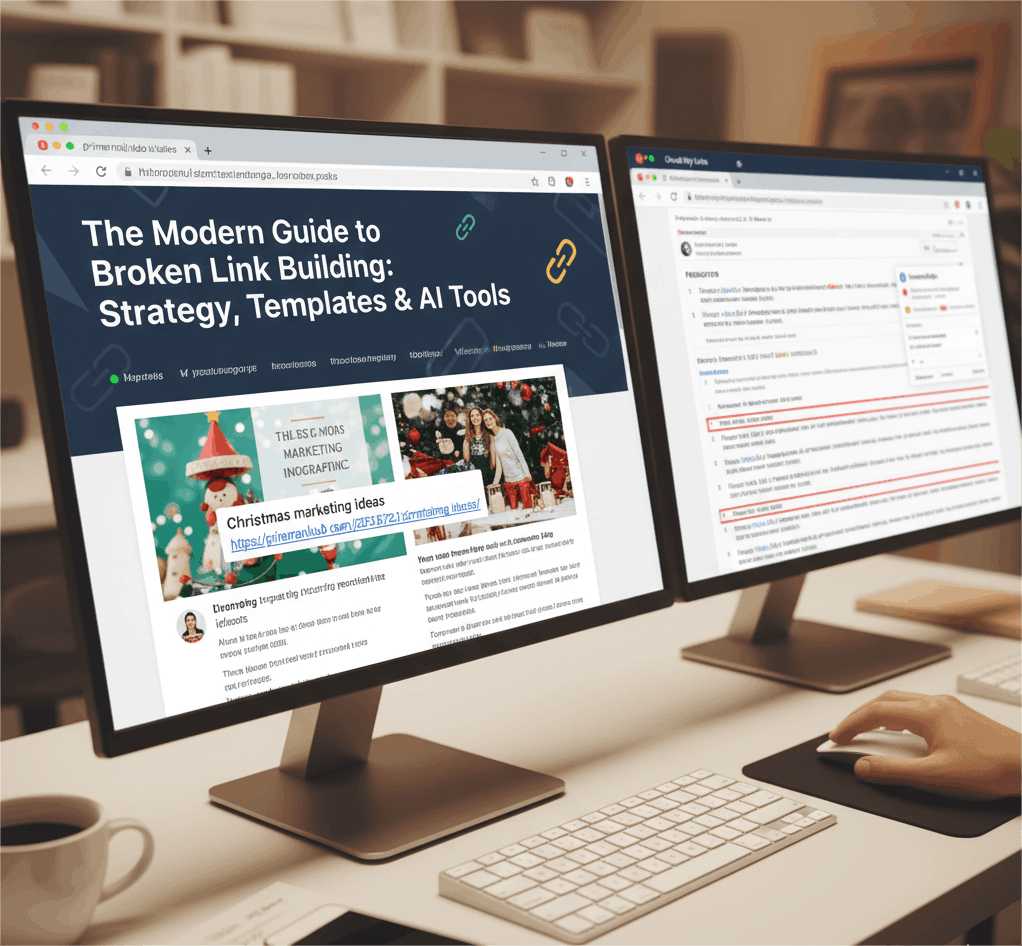
Let’s face it: the internet is decaying.
It’s called “Link Rot,” and it’s happening right now. Studies show that a massive chunk of web links break every single year. Companies go out of business, blogs get abandoned, and URLs change during site migrations without redirects.
While this is a headache for users, it’s arguably the biggest untapped opportunity for SEOs in 2026.
Welcome to the world of Broken Link Building (BLB).
At its core, the concept is simple: you find a reputable website that links to a dead resource (a 404 error), you reach out to the site owner to let them know, and—here’s the kicker—you offer your own working, high-quality content as a replacement.
Why does this work? Because of the Reciprocity Principle. You aren’t just cold-emailing a stranger begging for a favor. You are doing them a solid. You’re fixing their user experience (UX) error, and in return, you’re asking for a small nod of appreciation: a backlink.
But here’s the problem: most people do this wrong. They spam thousands of webmasters with generic “You have a broken link” emails and wonder why they get ignored.
In this guide, we’re going to scrap the old 2015 tactics. I’ll walk you through a modern, “sniper-focused” approach that uses AI to personalize outreach, realistic benchmarks to keep you sane, and methods to find opportunities even if you don’t have a budget for expensive tools.
Does Broken Link Building Still Work in 2026?
I hear this question a lot. “Isn’t broken link building dead?”
The short answer is no. The long answer is that the lazy version of it is dead.
If you are scraping 10,000 random sites and blasting out a template that says, “Dear Webmaster, I found a broken link, please link to me instead,” you are going to fail. We’ve all seen those emails. They go straight to the trash.
However, the “sniper” approach—where you carefully vet the site, check the context, and offer a truly superior replacement—still converts beautifully.
Let’s Talk Numbers
Let’s be real about success rates so you don’t get discouraged. If you send 100 emails, you are not going to get 50 links.
- Average Conversion: A 3–5% success rate is actually quite normal.
- Good Conversion: If you are hitting 7–10%, you are crushing it.
Why do site owners still say yes? Because nobody likes a broken website. Dead links hurt their SEO and annoy their readers. By pointing out a specific error and handing them the solution on a silver platter, you save them time. That is valuable.
Step 1: Finding the “Golden” Opportunities
You can’t build a house without bricks, and you can’t build links without broken URLs. There are two main ways to hunt these down: the precise “Competitor Method” and the broader “Resource Page Method.”
Method A: The Competitor Analysis (The Sniper Approach)

This is my favorite method because the intent is already proven. If a site linked to your competitor in the past, they are highly likely to link to you now—especially if the competitor’s page is dead.
The Action Plan:
- Identify Dead Competitors: Don’t just look for broken blog posts. Look for entire companies in your niche that went bust or rebranded. Did a software tool shut down? Did a popular industry blog stop updating? These are goldmines.
- Use SEO Tools: If you have Ahrefs or Semrush, use their “Broken Backlinks” report. Enter a competitor’s domain, filter for “404 not found” pages, and sort by “Referring Domains.”
- Spot the Pattern: You might find that a competitor had a “Guide to Email Marketing” that has 500 backlinks but now returns a 404 error. That is 500 potential emails you can send.
Method B: Resource Page Scraping (The Volume Approach)
This is the classic method. You are looking for “Links” pages or “Resources” pages that curate lists of helpful tools and articles. These pages tend to rot faster than others because they contain so many external links.
The Action Plan: Go to Google and use Search Operators. These are special commands that help you filter search results. Try combinations like:
Your Keyword + "resources"Your Keyword + "useful links"Your Keyword + "suggested reading"Your Keyword + inurl:links
The Free Tool Hack: You don’t need to click every link manually. Install a free Chrome extension like “Check My Links” or “LinkMiner.” When you land on a resource page, run the extension. It will highlight healthy links in green and broken links in red. If you see a page bleeding red with 404s, you’ve found an opportunity.
Step 2: Vetting the Links (Don’t Waste Your Time)
This is the step most guides skip, and it’s why most campaigns fail. Just because a link is broken doesn’t mean it’s worth chasing.
Before you get excited and start writing content, you need to filter your list.
- Relevance Check: Is the broken link actually relevant to your site? If you run a gardening blog and you find a broken link on a crypto news site, ignore it. Even if you get the link, it won’t help your SEO much.
- Authority Check (DR/DA): Check the Domain Rating (DR) or Domain Authority (DA). Is the site respectable? I usually avoid chasing links from sites with a DR below 10 or 20 unless they are super relevant local businesses.
- The “Zombie” Check: Look at the date. Was the page last updated in 2012? If a blog hasn’t published a new post in five years, nobody is home. Don’t email them. You’re shouting into the void.
Step 3: Creating “Replacement” Content
Okay, you found a broken link on a high-authority site. Now, what do you offer them?
You cannot just send them to your homepage. You need a piece of content that acts as a 1:1 replacement for what used to be there.
The Wayback Machine Technique
Go to Archive.org (The Wayback Machine) and paste the broken URL. This time machine will show you exactly what that page looked like before it died.
Analyze the dead content:
- What was the topic?
- Was it a guide? A tool? A listicle?
- Why did people link to it?
The Strategy: Do not copy it. Beat it. If the old post had “5 Tips for festive SEO,” you need to write “15 Data-Backed Tips for Seasonal Marketing.” If the old post used stats from 2018, you need stats from 2026.
Matching Intent
Context is king. If the broken link was pointing to a downloadable PDF checklist, sending them a 3,000-word history essay won’t work. They linked to a utility. You need to provide a similar utility.
For example, if you are looking to build links to a page about seasonal promotions, you might want to ensure your content is as visually engaging as the dead resource. Speaking of seasonal content, strategies like Christmas marketing ideas often attract a lot of links during the holidays—if you find a dead link in that niche, creating a vibrant, updated guide is a surefire way to win that placement.
Step 4: The Outreach Strategy (With AI Templates)
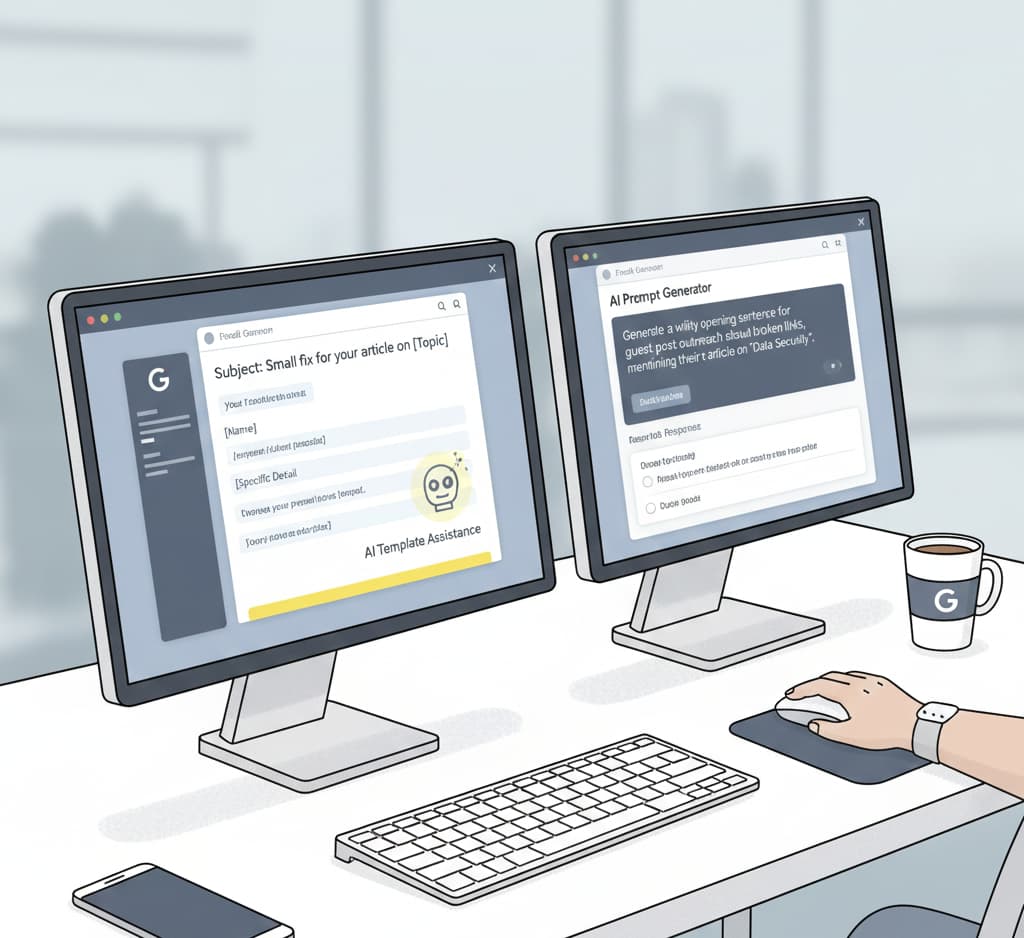
This is where the rubber meets the road. Outreach is scary for some, but it doesn’t have to be. The key is to remember that you are being helpful, not annoying.
Finding the Right Contact Info
Please, for the love of SEO, do not email support@ or info@ unless you have no other choice. Those inboxes are where emails go to die.
You want to reach the person who actually cares about the blog. Look for:
- The Editor
- The Content Manager
- The Marketing Lead
Tools like Hunter.io or Voila Norbert are great for finding these specific email addresses. If you’re on a budget, check the “About Us” page or their LinkedIn profile.
Writing the Pitch (The 3-Part Formula)
Your email needs to be short, sweet, and human.
- The Flattery (The Hook): Prove you aren’t a bot. Mention something specific about their site or a recent article.
- The Help (The Value): “I was browsing your post about X and noticed a link wasn’t working…”
- The Pitch (The Solution): “I actually wrote a guide on this topic recently that covers X, Y, and Z. It might be a good replacement if you’re updating the page.”
AI to the Rescue
You can use ChatGPT or Gemini to help write these, but don’t let it do everything. Use a prompt like this to generate unique openers so you don’t sound robotic:
“I am emailing the editor of a tech blog about a broken link on their page about ‘Cloud Storage.’ Write a witty, casual opening sentence that compliments their recent article on ‘Data Security’ without sounding fake.”
Sample Templates (Steal These)
Template 1: The “Helpful Samaritan” (Soft Pitch) Best for high-authority sites where you want to build a relationship.
Subject: Small fix for your article on [Topic]
Hi [Name],
I was researching [Topic] today and stumbled across your excellent guide. The section on [Specific Point] was really helpful—I hadn’t thought about it that way before.
However, I did notice that the link pointing to [Dead Site Name] seems to be broken (it goes to a 404 error).
Just wanted to give you a heads-up so you can fix it!
Also, if you are looking for a replacement, I recently published a detailed guide on [Topic] here: [Your Link]. It covers [Unique Angle] which might be useful for your readers.
No pressure at all, just thought I’d share. Thanks for the great content!
Best, [Your Name]
Template 2: The “Direct Fix” (Straight to the Point) Best for resource pages or busy webmasters.
Subject: Broken resource on your [Page Name]
Hi [Name],
I’m digging through your resources page on [Topic]—great list!
I noticed one of the links (to [Dead Article]) is no longer working.
Since that resource is gone, I thought my recent guide on [Your Topic] might be a good substitute. It’s fully updated for 2026 and includes [Key Feature].
Here is the link if you want to check it out: [Your Link]
Hope that helps keep the list fresh!
Cheers, [Your Name]
Common Mistakes That Kill Campaigns
I’ve sent thousands of these emails, and I’ve learned the hard way what not to do.
1. Pitching Abandoned Blogs I mentioned this earlier, but it bears repeating. If the last blog post was from 2019, don’t waste your credit. The lights are off.
2. Aggressive Follow-ups This is not a sales negotiation. You are pointing out a broken link. One polite follow-up after 3-5 days is fine. Sending four emails demanding a link will just get you blocked.
3. Asking for the Link Immediately Notice in the templates above, I say “No pressure” or “If you want to check it out.” Don’t demand the link. Suggest it. The soft sell always wins in link building.
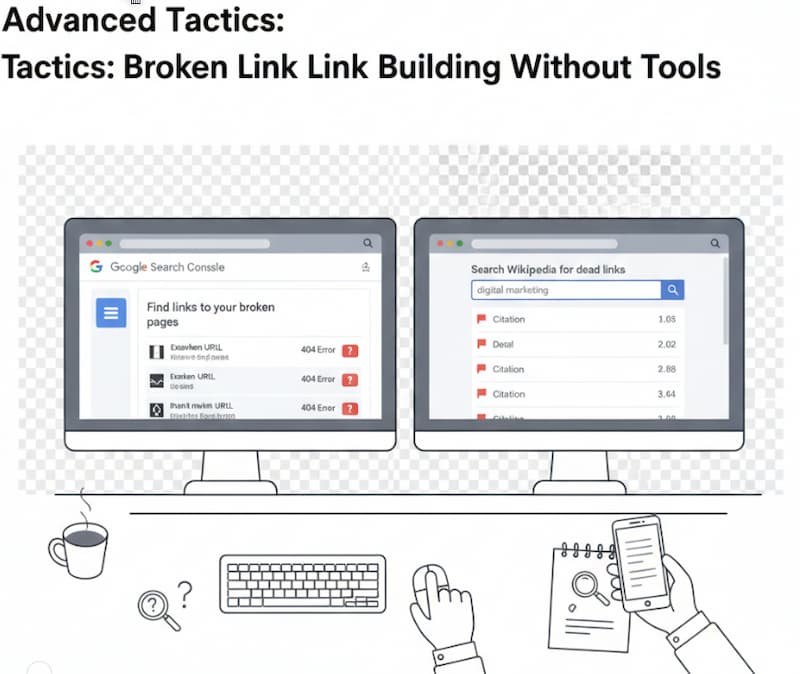
Advanced Tactics: Broken Link Building Without Tools
“But wait,” I hear you ask. “I don’t have $100/month for Ahrefs. Can I still do this?”
Absolutely. It just takes a little more elbow grease.
The “Link Reclamation” Hack: Go to your Google Search Console (which is free). Look at your “External Links” report. sometimes, other sites link to pages on your site that you have deleted or moved. These are broken links pointing to YOU! Reach out to those sites and give them the correct, new URL. This has a near 100% success rate because they already wanted to link to you.
The Wikipedia Method (WikiGrabber): Wikipedia is full of “Citation Needed” and “Dead Link” tags. You can use free tools like WikiGrabber to search for Wikipedia pages in your niche that have dead citations. While Wikipedia links are “Nofollow” (they don’t pass direct SEO juice), they build massive trust and authority, and often lead to other sites linking to you.
Conclusion & Next Steps
Broken Link Building isn’t a magic button you press to rank #1 overnight. It’s a grind. It requires research, vetting, and good writing.
But that’s exactly why it’s so powerful. Most of your competitors are too lazy to do it right. They are busy spamming generic requests while you are out there actually fixing the internet and providing value.
Ready to start? Here is your homework:
- Install the “Check My Links” Chrome extension right now.
- Go to your top 5 favorite blogs in your industry.
- Search for their “Resources” or “Links” page.
- Run the checker.
You might just find your first opportunity in the next 10 minutes. Good luck!
Read More-Canadian Influencer Marketing in 2026: Statistics, Trends & The Shift to Performance

Leave a Reply